Set Lonnert
Humanistics & Technology
Since 1980 • Humanistics • Philosophy • Computing
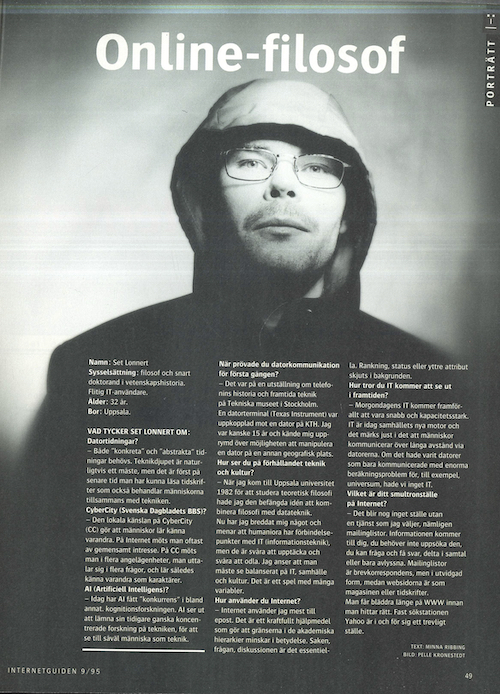
Combining humanities and technology since 1980. When there were only 23,500 webservers in 1995, I had already been working with computers for fifteen years, exploring the intersection of analytical philosophy and computing—a perspective that remains crucial for bringing clarity and simplicity to our digital world.
With experience spanning over four decades and academic training in the humanities, I bring a unique lens to understanding how technology shapes society and human experience.
1995: 23,500 webservers, homepage launched
1998: 2.4M websites (Google launches)
2027: SLHT celebrates 30 years
Featured Work
New — Outside the Series

Comfortication (2026)
AI, Friction, and the Future of Human Becoming. For centuries we have worked to remove friction: the effort a task demands, the waiting, the uncertainty of a decision, the labour of calculation and memory. This book gives that process a name — comfortication — and sets against it a second and equally ancient principle: that certain difficulties are not obstacles to be cleared away, but the medium through which we acquire competence, judgement and meaning.
Most of history removed friction from around the mind while leaving the mind's own work intact. Artificial intelligence is the first widely adopted technology to reach inside that work. An inquiry, not a verdict.
Edition: 1
ISBN: 9789181345438
Format: A5, 148 × 210 mm
Pages: 184
Saying What You Mean
Saying What You Mean
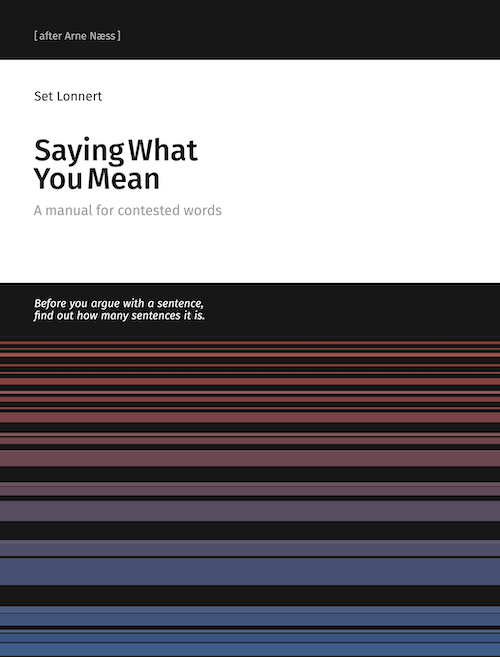
Two editions • English & Swedish • Books on Demand • 2026Two people argue for two hours and get nowhere. Neither has lied and neither has misquoted. They were reading one sentence two different ways, and nothing in the argument was built to notice.
A working manual for the moment a word stops being free and starts being a rule — in a policy, a statute, a platform's terms of service, an accusation. After Arne Næss, whose stencils for students in occupied Norway in 1941 did the same job for an earlier world. In English as Saying What You Mean, and in Swedish as Att säga vad man menar.

A Calculus of Representation
A Calculus of Representation
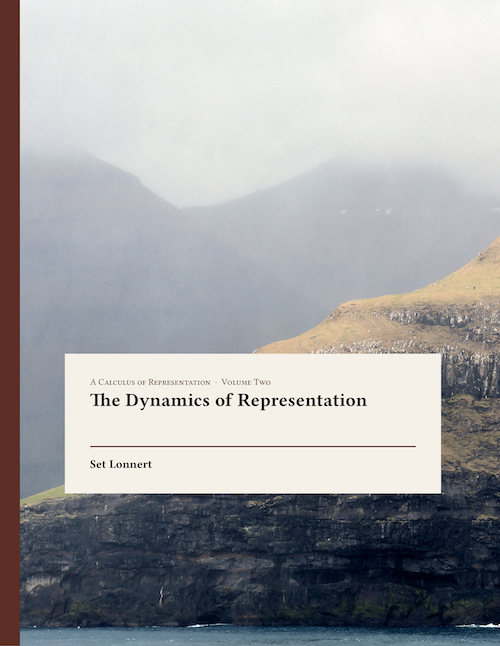
Three volumes • Books on Demand • 2026A work in three volumes developing a framework carried since the 1980s: a notation that keeps what there is and how it is grasped on the page at the same time, instead of collapsing either into the other.
The first volume sets the notation down, and finds it already present — unremarked, and six centuries apart — in Ockham and in Frege. The second sets it in motion, and asks what a record of an inquiry still holds once the inquiry has changed its mind. The third peoples that record, and asks what becomes of it when it is kept by many inquirers rather than one. The volumes are published under CC0, with no rights reserved.


The Code Crafting Series
Code Crafting
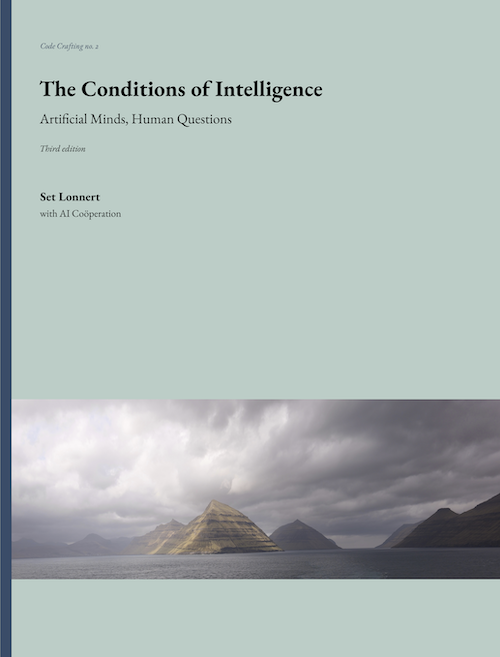
Five volumes • Books on Demand • 2026A series about how computing actually works and what it commits us to — written on the conviction that the technical and the philosophical questions are the same questions, asked at different depths.
The volumes cut the field along different axes: across the foundations of computation, down through a single language from silicon to semantics, outward toward artificial minds and the conditions that produced them, and back again to the daily, unfinishable condition of software work.




Philosophy in Practice
Analytical Clarity
Bringing the precision of analytical philosophy to the often murky world of technology. Clear concepts lead to better understanding and more thoughtful implementation. This clarity helps e.g., expose hidden assumptions and prevents confusion from propagating into systems that must operate reliably at scale.
Historical Perspective
Over four decades of computing experience provides context that's invaluable for understanding current trends and anticipating future developments. It also sharpens the ability to distinguish enduring principles from short-lived trends.
Humanistic Technology
Technology exists within society, not separate from it. Every technical decision has human implications that deserve careful consideration. And every system we design, deploy, or maintain carries with it assumptions about how people should live, work, and interact with one another.