Set Lonnert
Humanistics & Technology
Since 1980 • Humanistics • Philosophy • Computing
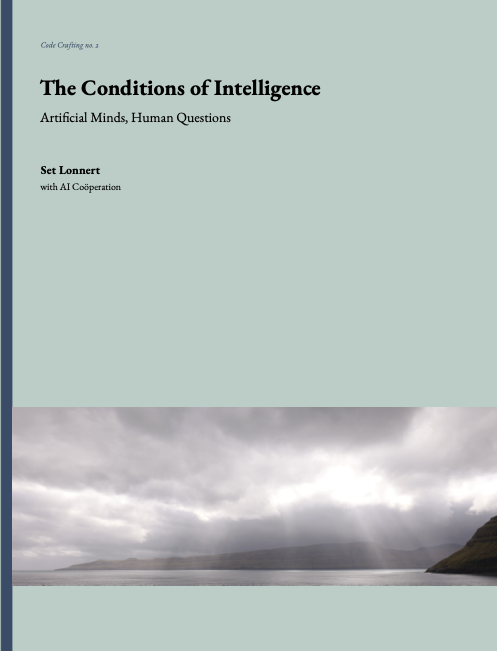
The Conditions of Intelligence
Artificial Minds, Human Questions
What does it mean to think? As artificial systems grow ever more capable, the question rebounds on us with fresh urgency. This book approaches the rise of machine intelligence not through hype or alarm, but through careful philosophical inquiry — tracing the conditions that make intelligence possible and asking what those conditions reveal about us.
Drawing on four decades of work at the intersection of computing and the humanities, Set Lonnert examines the assumptions hidden inside our models, the human questions that no algorithm can dissolve, and why clarity of thought matters more than ever in an age of artificial minds.
Click the cover above to browse the summary.
Themes
What Intelligence Requires
Intelligence is not a property that emerges from scale alone. The book examines the logical, embodied, and social conditions that any genuinely intelligent system must satisfy — and where current AI architectures fall short or succeed in unexpected ways.
The Human in the Question
Every debate about artificial minds is also a debate about natural ones. Humanistic inquiry offers tools — conceptual analysis, historical context, close reading — that engineering alone cannot provide when the object of study is intelligence itself.
Clarity Over Certainty
Rather than settling grand questions, the goal is precision: sharpening the distinctions that get blurred in popular discourse, exposing the assumptions embedded in everyday talk about AI, and making it easier to think and argue well.